Restarting a Coating Job After a Weather Delay: What to Recheck
A practical restart checklist for weather-delayed coating work, covering exposure records, fresh site readings, surface condition, recoat timing, equipment checks, and release responsibility.
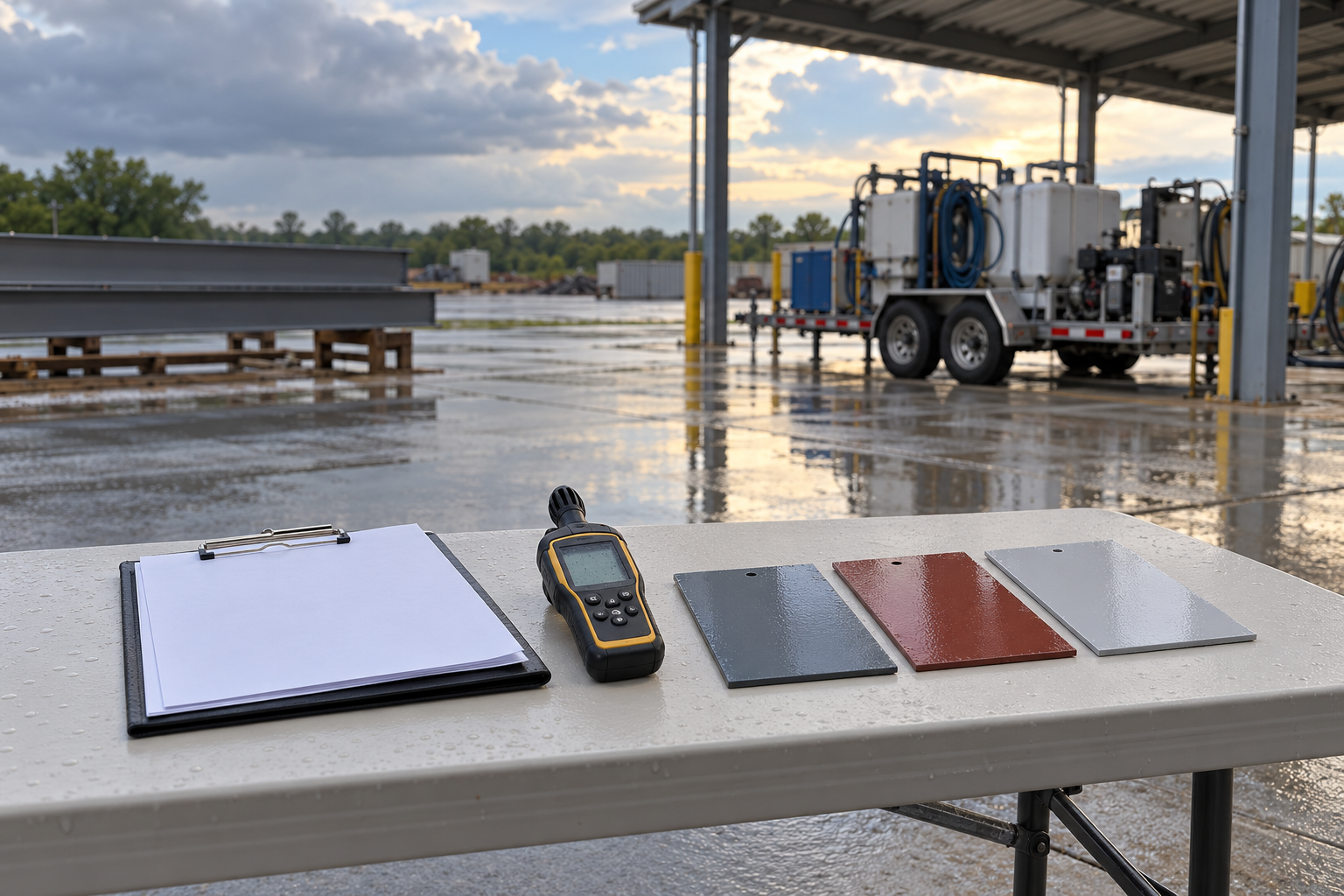
The rain has stopped, the crew is back, and the schedule is already tight. Before the gun comes out, establish what changed while the coating job was on hold. A prepared surface, exposed primer, partly completed membrane, and parked spray rig each need a fresh check. Treat the restart as a short, documented release decision, with someone responsible for saying which areas can proceed.
Start with the point where work stopped
Use the daily report, marked-up drawing, and photos to locate the stopping point. Separate areas that were only prepared from areas already primed or coated. Record the product and batch, application time, last inspection, and protection left in place. Include unfinished edges, penetrations, and temporary terminations.
If the pause record is incomplete, flag the uncertainty before making assumptions. “Primed yesterday” gives little help when different sections were finished hours apart. A simple area-by-area list lets the crew see what needs inspection, what needs corrective work, and what remains on hold. Add what happened during the delay: rain exposure, standing water, wind damage, or access by other trades.
Take new readings where the work will happen
Measure air temperature, substrate temperature, relative humidity, dew point, and the surface-to-dew-point difference. DeFelsko’s environmental monitoring guidance explains why air and surface temperatures can differ and why condensation on prepared steel can be difficult to see. Take readings at representative work locations, including shaded or colder sections, and record the time and location.
Compare the results with the current product documents and project requirements. Use their limits for application and cure, rather than a remembered rule from another system. Review the expected weather through the required protection period, too. Keep monitoring during the resumed work; one acceptable reading does not describe the entire shift.
Where concrete has been exposed to water, reassess substrate moisture using the method and acceptance criteria specified for the system. Environmental readings alone do not answer that question.
Inspect what the delay left on the surface
Walk the actual application area, including beneath temporary covers and around drains, edges, and traffic routes. Look for water, dirt, windblown debris, rust on exposed steel, damage to primer, and contamination from boots or nearby work. Photograph suspect areas and mark their limits so they cannot accidentally disappear under the next pass.
Some contamination needs more than a visual check. Elcometer’s surface-cleanliness guidance distinguishes visible contaminants, dust, and non-visible soluble salts. Repeat the applicable cleanliness tests where exposure or the inspection plan warrants them. Use the project’s test methods and acceptance criteria.
Agree on the cleaning, drying, or renewed preparation needed for each affected area, then reinspect it. Avoid prescribing the same cleaning treatment across bare substrate, primer, and finished membrane. Each surface may have different requirements, and the coating manufacturer should resolve uncertainty about a weather-exposed layer.
Recheck the exact recoat interface
Calculate elapsed time from the application record for each area. Identify what is being applied over what: membrane over primer, another membrane pass, or a topcoat. The relevant window belongs to that particular combination.
For example, Sika’s Sikalastic-835 I product information lists separate waiting times for specified primers and for recoating the polyurea itself. It also notes that surface and ambient conditions affect those times. Those product-specific values should not be borrowed for another system.
If the permitted window has elapsed, the exposure history is unclear, or the layer shows a change in condition, hold that area and obtain the manufacturer’s written direction. Ask for the required preparation, any compatible primer, testing, and the next application window. Record the response against the affected area. An improvised solvent wipe or extra pass should never stand in for that direction.
For background on the timing terminology, see Coatingpedia’s guide to recoat windows.
Restart the equipment by its own procedure
Have a trained operator complete the checks and startup sequence for the actual proportioner, hoses, gun, and feed equipment. Review how the equipment and materials were stored during the delay, any exposure to water, and any unresolved alarms or damage.
The Graco Reactor 3 operation manual, for example, includes startup checks for inlet strainers, lubrication, and material levels, plus daily hose and coupling inspection. It also requires its pressure-relief procedure before checking or servicing equipment. Follow the applicable manual in full; a restart checklist is no substitute for those safety instructions.
Confirm material conditioning and application settings against the coating supplier’s requirements. Complete the specified startup verification before production, and stop if results are outside the approved limits.
Give the crew a clear restart decision
Use one brief release record with these fields:
- Area identification and the stage reached before the delay.
- Exposure history, photos, and current environmental readings.
- Surface inspection and required moisture or cleanliness test results.
- Recoat timing, corrective work, and manufacturer direction where needed.
- Equipment startup confirmation and any required verification results.
- Released areas, held areas, time of release, and responsible person.
Have the person designated by the project’s inspection plan authorize the restart, including any required inspector or owner review. Brief the crew on the boundary between released and held work. Keep the record with the daily report and continue the required checks as conditions change.
The useful question at restart is simple: what evidence shows this particular area is ready for its next coat today?
Researched trade guidance, not a project specification or a podcast transcript. Follow the current product documents, project requirements, and equipment manuals. Cover: original AI-generated illustration of a weather-delayed site.
Spotted an error? We post corrections on the page itself, dated. Tell us what is wrong.
Disagree, or have a story like this? That is an episode. Pitch yourself as a guest.