Reporting a Coating Problem: What to Send Before Assigning a Cause
Build a useful coating-problem inquiry with clear observations, a timeline, location-linked photos, project records, and an agreed evidence-preservation plan.
A blister, a lifted edge, or a patch of rust can start a difficult conversation. The first useful response is to make the condition understandable to someone who has not visited the site. A clear coating-problem inquiry gives the technical team enough context to decide what to inspect and which evidence to preserve.
Keep the cause open while that work happens. A photograph may document a symptom, but assigning responsibility requires more. AMPP’s discussion of coating-failure investigations brings together specifications, site observations, laboratory testing, and the parties involved in the project.
Deal with immediate hazards first
Report leaks, unsafe access, loose material, or possible exposure through the site’s safety and operating procedures. Evidence collection must not delay an emergency response. Let responsible site personnel decide the immediate controls and access restrictions.
For non-emergency examination, avoid cleaning, stripping, puncturing blisters, or applying a repair before the technical team agrees what needs recording. If urgent protective work is necessary, document the condition and intervention as safely as possible. Do not enter a tank, disturb unknown residues, or handle uncured material simply to improve the report.
Write down what was actually observed
Use a short opening statement with the asset, exact area, visible condition, first observation date, and current operating status. Separate direct observations from somebody else’s account and from a suggested explanation.
For example, a hypothetical inquiry might say: “Raised areas were first observed beside the east-wall joint during Monday’s inspection. The adjacent wall appears unchanged in the attached photographs. No samples have been removed.” That gives the reviewer a starting point without labeling the condition as moisture damage, poor preparation, or defective material.
Record uncertainty plainly. “First noticed Monday” leaves the onset unknown unless an earlier inspection establishes more. “Appears unchanged” does not certify an area as sound. Where estimates are unavoidable, identify them as estimates.
Show the pattern, including comparison areas
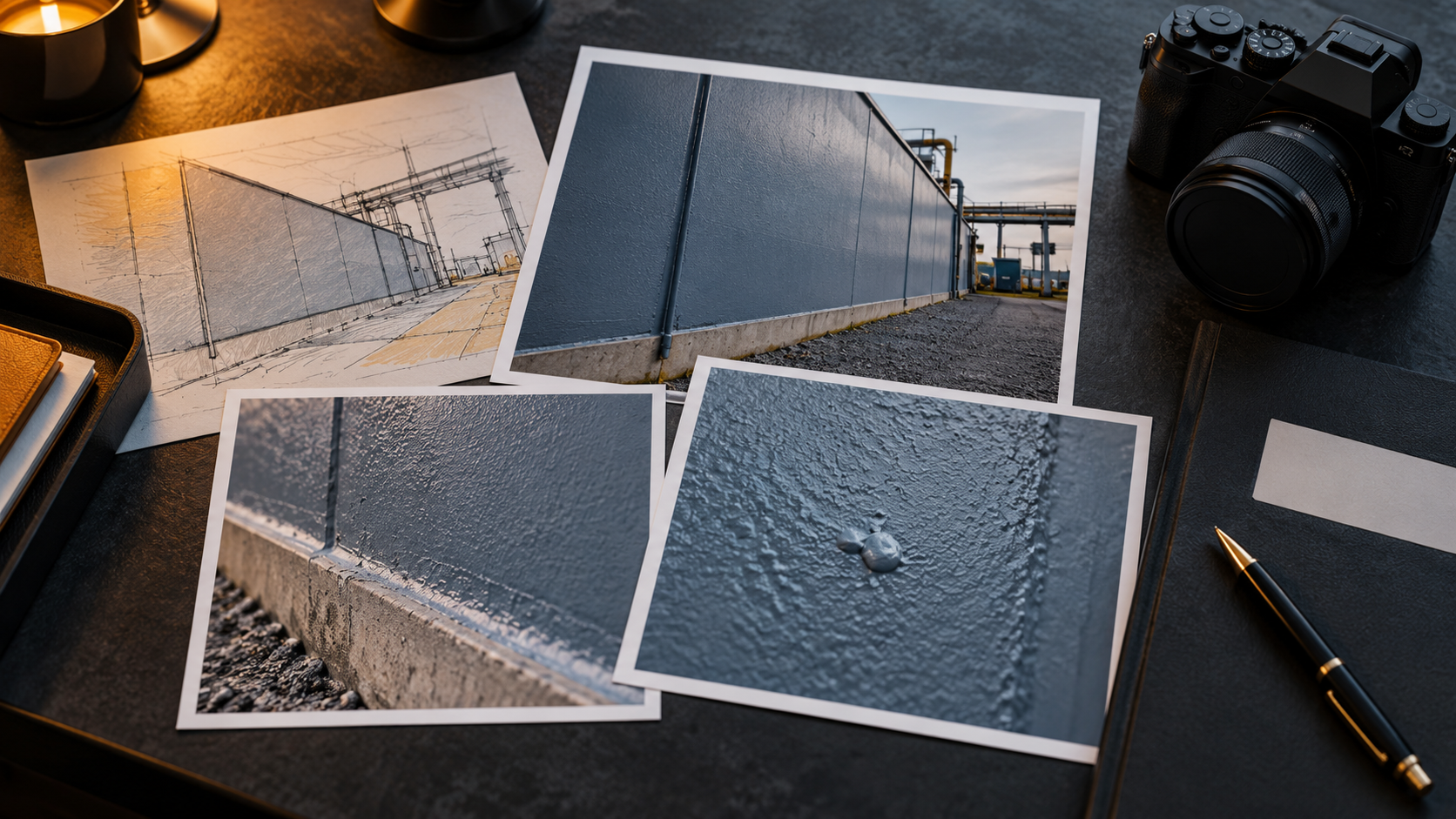
Provide an overview photograph that locates the problem, a closer view showing its distribution, and a detail image with a scale where safe and practical. Use a sketch or existing drawing to connect the photographs to the asset. Keep the original image files and identify the date, location, and photographer.
Include areas that look different and nearby areas with no visible change. Note whether the observed condition follows a joint, weld, drain, repair boundary, or particular exposure. Also mark areas that could not be inspected. These observations help frame questions; they do not establish the mechanism.
KTA’s project-familiarization guidance emphasizes understanding the history and recognizing patterns before probing the coating. Its field-examination guidance also considers representative failing and apparently non-failing areas, with written and photographic location records.
Build a timeline around the change
Set out application dates, return to service, first observation, later inspections, and any intervention. Add relevant operating events: a change in stored material, cleaning practice, temperature, traffic, impact, or water exposure. State where each entry came from, such as an inspection sheet, maintenance record, or named witness’s recollection.
Preserve gaps instead of filling them from memory. If the first photograph is weeks after the reported onset, say so. If cleaning occurred before the photographs, record that too. A short chronology with honest limits is easier to investigate than a confident narrative assembled after the fact.
Attach the records that answer the first questions
Identify the substrate and each installed coating layer by product name. Attach the applicable specification, product-document revisions used for the work, application and inspection records, approved changes, and relevant maintenance history. Point to the files already available rather than rewriting them into a new account. List missing records separately.
KTA’s investigation framework distinguishes the intended work from what was actually done, then combines that background with field and laboratory evidence. A requirement in a specification should therefore remain distinguishable from a recorded result.
For an overview of how those records feed into the investigation, Coatingpedia’s coating-failure reference follows the process from the site survey through sampling, laboratory analysis and the final report.
Keep appearance ratings in their proper role
Where a qualified reviewer uses standardized condition ratings, preserve the method, edition, location, and result. ASTM D714-25 addresses blister size and density. ASTM D610-25 addresses the amount and distribution of visible rust on painted steel.
Those stated scopes describe condition. A severity rating alone does not establish why the condition developed or who caused it. Do not assign a formal rating from a casual photograph or claim compliance with a method that was not followed. Plain observations are preferable to an unsupported test label.
Agree on sampling before removing evidence
Ask the investigator or receiving laboratory what samples, comparison areas, quantities, packaging, and identification they need before collection begins. Agree who is authorized and competent to collect them. Record sample locations and transfers using the requested tracking or chain-of-custody process; keep specimens from different locations distinguishable. KTA’s sampling guidance explains the importance of sample identification and location photographs.
KTA’s investigation framework recommends coordination between the investigator and laboratory so that analyses fit the actual problem. An indiscriminate test list can consume time and money without resolving the relevant question. The inquiry should enable that planning, rather than prescribe a universal sampling or repair procedure.
Finish with a clear request
Send one indexed package to the appropriate project contacts. State the decision needed, the operational urgency, available access, and who can answer follow-up questions. Ask what further information or site assessment is required. Keep technical findings, proposed repairs, and any responsibility decision identifiable as separate outcomes as the investigation develops.
Researched editorial guidance, not episode notes, a failure determination, or a sampling procedure. Follow project requirements, site safety procedures, and direction from qualified technical personnel.
Spotted an error? We post corrections on the page itself, dated. Tell us what is wrong.
Disagree, or have a story like this? That is an episode. Pitch yourself as a guest.